
Skip to content

NIRANJAN PILLAI · PRODUCT MANAGER

Product Strategy · User Research · Product Analytics · Growth · UX

Hey there 🙌, I am Niranjan!

Results-driven Product Management professional with a B.Sc. in Computer Science and skills in Product Lifecycle Management, product analytics, Agile, and user research. Seeking to build user-centric products and drive measurable business value through data-driven decisions.

B.Sc.
Computer Science
Experience
Business Operations
Trained
Product Management
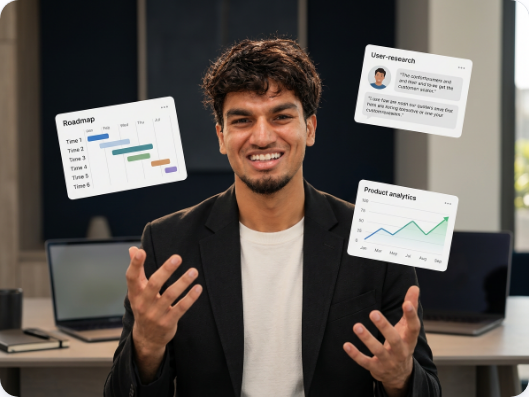
Niranjan Pillai presenting product roadmap, user research and analytics work

Recruiter snapshot

What I bring to the product team

A 30-second read of the capabilities behind the case studies below.

  • 01

    Discover

    Goal: Understand users, markets, and opportunities.

    User ResearchCustomer InterviewsMarket ResearchCompetitor AnalysisProblem DiscoveryPersona DevelopmentJobs-to-be-Done

    PM Deliverables

    User personas, research insights, market analysis, opportunity areas.

  • 02

    Define

    Goal: Convert insights into a clear product problem and strategy.

    Problem FramingProduct VisionProduct StrategyValue PropositionPrioritizationSWOT AnalysisBusiness Model Thinking

    PM Deliverables

    Problem statements, product vision, goals, opportunity assessment.

  • 03

    Plan

    Goal: Decide what to build, why, and in what order.

    RoadmappingFeature PrioritizationRICE FrameworkMoSCoWUser StoriesPRDsRequirements Gathering

    PM Deliverables

    Product roadmap, PRD, user stories, prioritized backlog.

  • 04

    Build

    Goal: Collaborate with teams to turn product requirements into a working solution.

    Agile & ScrumSprint PlanningBacklog ManagementFigmaJira

    PM Deliverables

    Sprint plans, acceptance criteria, prototypes, development-ready requirements.

  • 05

    Launch

    Goal: Successfully bring the product or feature to customers.

    Go-to-Market StrategyLaunch PlanningRelease ManagementProduct MarketingUser CommunicationRisk ManagementStakeholder Alignment

    PM Deliverables

    Launch plans, release notes, GTM strategy, launch metrics.

  • 06

    Measure & Iterate

    Goal: Measure product performance and continuously improve it.

    Product AnalyticsA/B TestingKPI & Metric DefinitionFunnel AnalysisRetention AnalysisExperimentationContinuous Improvement

    PM Deliverables

    Product dashboards, experiment results, KPI analysis, optimization recommendations.

User Problem → Product Strategy → Prioritization → Execution → Launch → Data & Iteration

Evidence

Selected Product Case Studies

A closer look at how I approach product problems—from discovery and research to prioritization, prototyping, analytics, and iteration.

Illustration of a community sports platform: player matching, game discovery and a personalised recommendation graphFeatured Case Study · Concept

Product Strategy · ML Product Thinking

PlayNest

Intelligent Community Sports Platform

Product StrategyML / AIUXProduct Analytics
Problem
People who want to play a sport regularly cannot reliably find a game near them with players at a similar skill level.
My product approach
Framed the discovery→match→play→return loop, prioritised the matching experience as the MVP hypothesis, and defined proposed ML use cases (skill estimation, matching, recommendations, demand prediction) with the metrics that would prove them.
My role
Product Management / Product Case Study
Key areas
Product StrategyPlayer MatchingPersonalizationMarketplace ThinkingML Product ThinkingUX
Tools
FigmaSurvey toolingSpreadsheetsJourney mapping
ConnectSpace logo: a blue circular mark around three people icons with the tagline Discover People. Build Belonging.Featured Case Study · Concept

Product Discovery · User Research

ConnectSpace

Community Discovery & Connection Platform

User ResearchProduct DiscoveryUXProduct Analytics
Problem
People move into a city, a campus or a new life stage and have no reliable way to find a community that actually fits them.
My product approach
Ran discovery first: interviews and a survey, synthesised into personas, pain points and insights, then defined the problem before designing a solution and prototyping the core discovery-to-join flow.
My role
Product Management / Product Case Study
Key areas
Product DiscoveryUser ResearchPersonas & InsightsCommunity ProductUX & PrototypingProduct Metrics
Tools
FigmaInterviews & surveysAffinity mappingSpreadsheets
Amazon Music logo on a smartphone with headphones and audio equalizer visuals in the backgroundFeatured Case Study · Proposed Strategy

Product Strategy · Growth · PLG

Amazon Music India Relaunch

Product Strategy & Product-Led Growth (Proposed)

Product StrategyGrowthProduct AnalyticsMonetization
Problem
Music streaming in India is a crowded, price-sensitive market where installs are easy to buy and weekly engagement is hard to earn.
My product approach
Chose social listening as the differentiating wedge, designed a PLG loop from personalised onboarding through 'Listen Together' to invites, and defined WSLS/AU as the North Star with activation, retention and conversion KPIs beneath it.
My role
Product Management / Growth Strategy Case Study
Key areas
Product StrategyProduct-Led GrowthEngagement LoopsNorth Star MetricKPI TreesPremium Conversion
Tools
Metric modellingGrowth loop mappingSpreadsheets
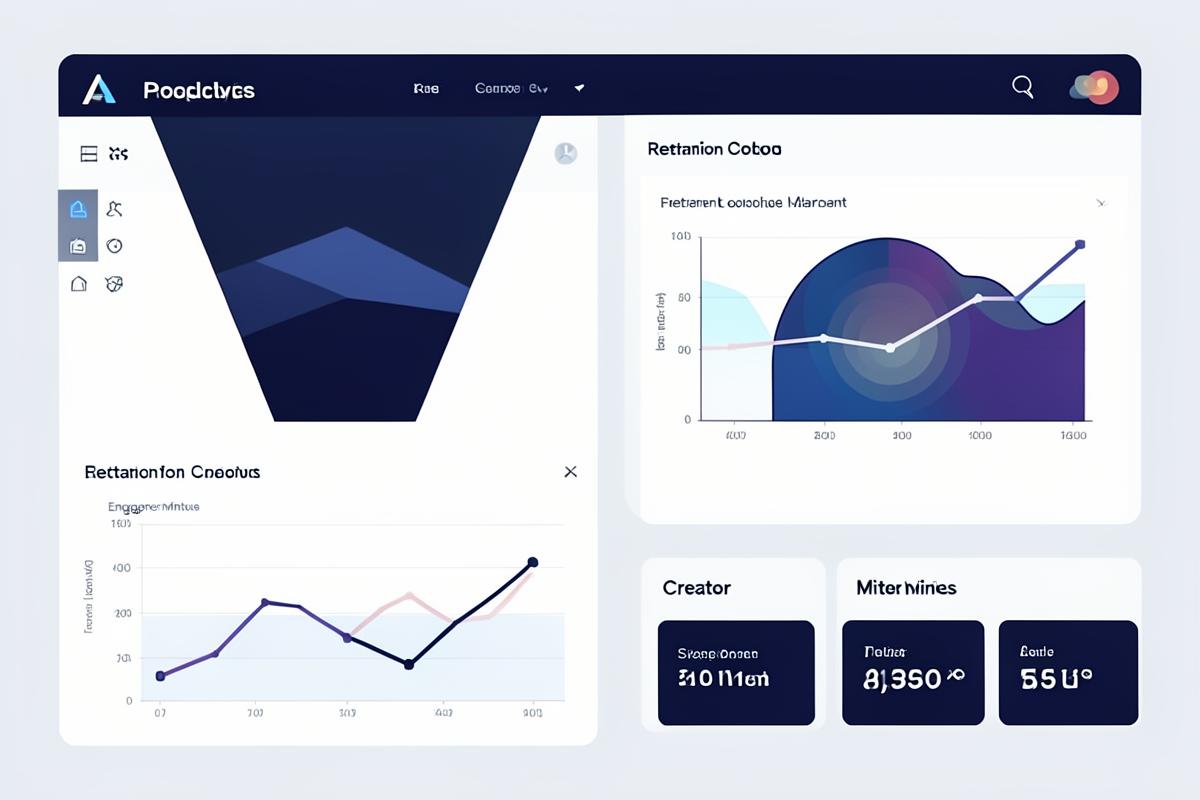
Illustration of a product analytics dashboard with a funnel, retention cohort heatmap and engagement metricsProduct Analytics

Product Analytics · Metrics Design

Spherely

Product Analytics Dashboard

Product AnalyticsSQLExperimentation
Problem
Teams track dozens of numbers without agreeing which behaviour actually signals product value.
My product approach
Started from product objectives rather than charts — mapped each objective to a metric, the user behaviour behind it and the business outcome it drives, with Meaningful Engagement Minutes as the North Star.
My role
Product Analytics / Metrics Design
Highlights
  • North Star: Meaningful Engagement Minutes
  • Objective → Metric → Behaviour → Business outcome mapping
  • Acquisition, activation, engagement, retention, creator and monetization views
  • Funnel and churn analysis rather than dashboard decoration
Key areas
Acquisition & ActivationEngagement & RetentionCreator MetricsFunnel AnalysisChurn AnalysisMonetization Metrics
Tools
SQLSpreadsheetsDashboarding
WhatsApp branding with community line-art icons on a green backgroundProduct & Monetization Strategy

Product Strategy · Monetization

WhatsApp Sports Communities

Product & Monetization Strategy (Proposed)

Product StrategyMonetizationGrowth
Problem
Sports coordination is fragmented across chat groups, spreadsheets and phone calls, so games fall apart before they are played.
My product approach
Unified the scattered coordination jobs into one ecosystem, then modelled monetization across subscription conversion, marketplace revenue and booking commission — all figures presented as illustrative targets.
My role
Product Strategy / Monetization Case Study
Highlights
  • One ecosystem replacing fragmented group coordination
  • Monetization: subscription conversion, marketplace revenue, booking commission, ARPU
  • Player reputation as the trust layer for matchmaking
  • All revenue figures are proposed, illustrative targets — not achieved results
Key areas
Group DiscoveryGame OrganisationTournament ManagementPlayer ReputationVenue BookingSports Commerce
Tools
Revenue modellingSpreadsheetsJourney mapping
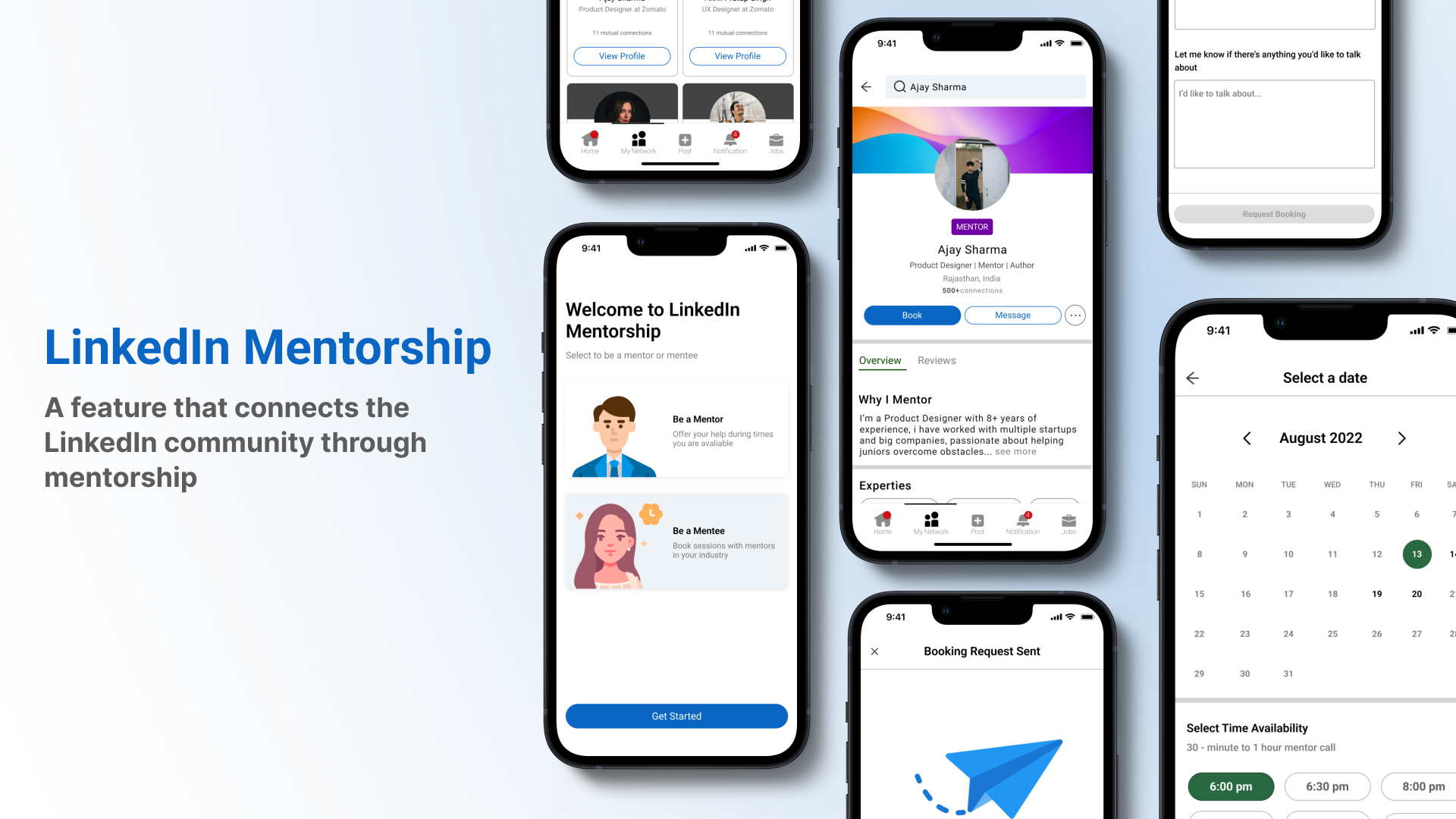
LinkedIn Mentorship concept mockups: mentor profile, booking calendar and onboarding screens on phonesUX & Product Discovery

User Research · UX

LinkedIn Mentorship Feature

User Research & Design Thinking

User ResearchUXProduct Discovery
Problem
Professionals can reach almost anyone on a network but still have no structured way to find and sustain mentorship.
My product approach
Empathize → Define → Ideate → Prototype → Test: guided onboarding, goal-based mentor matching, availability and session booking, with separate mentor and mentee flows and progress tracking.
My role
Product Discovery / UX Case Study
Highlights
  • Design thinking: Empathize → Define → Ideate → Prototype → Test
  • Goal-based matching instead of open-ended networking
  • Availability and session booking to make mentorship repeatable
  • Progress tracking for both mentor and mentee
Key areas
Design ThinkingGuided OnboardingGoal-Based MatchingSession BookingMentor & Mentee FlowsProgress Tracking
Tools
FigmaUser interviewsWireframing
Illustration of a database, data table, funnel chart and cohort retention heatmapSupporting Work

Analytics · SQL

Product Analytics & SQL

Turning raw event data into product decisions

SQLProduct Analytics
Problem
Product decisions stall when nobody can answer 'where exactly are users dropping off, and which cohort is it?' from the data.
My product approach
Wrote the queries myself against product datasets, then translated each result into the decision it should trigger rather than leaving it as a chart.
My role
Product Analytics / Data Analysis
Key areas
SQLFunnel AnalysisCohort AnalysisRetention AnalysisKPI Definition
Tools
SQLPythonSpreadsheets
Illustration of product dashboards, a funnel and a user journey line with milestone nodesSupporting Work

Technical Product Thinking

Product & Technical Case Studies

Short-form product teardowns and technical thinking

Technical Product ThinkingProduct Strategy
Problem
PM candidates are rarely tested on one big project — they are tested on how they reason about many small, unfamiliar ones.
My product approach
Practised reasoning in public: frame the problem, draft the PRD, define the metric, and sketch the system behind the feature.
My role
Product Case Studies
Key areas
Problem FramingPRDs & User StoriesSystem Design FundamentalsAPIsMetric Definition
Tools
DocumentationDiagrammingAPIs

Product methodology

How I Approach Product Problems

The same sequence runs through every case study on this site.

  1. 01

    Understand

    Learn the context, the users and the business before proposing anything.

  2. 02

    Research

    Talk to users, review data, and separate stated wants from real needs.

  3. 03

    Define

    Write a problem statement precise enough to disagree with.

  4. 04

    Ideate

    Generate options against the problem, not against a preferred solution.

  5. 05

    Prioritize

    Impact vs effort, RICE or MoSCoW — with the reasoning made explicit.

  6. 06

    Build

    Define the MVP, write it down clearly, prototype and validate early.

  7. 07

    Measure

    Instrument first. Every metric maps to a decision it could change.

  8. 08

    Iterate

    Run the experiment, read the result honestly, and adjust.

Problem Identification → User Research → Problem Definition → Ideation → Prioritization → MVP → Prototyping → Analytics → Experimentation → Continuous Improvement

Let's build something meaningful.

Interested in discussing a Product Management opportunity, project, or collaboration?